Client Brief
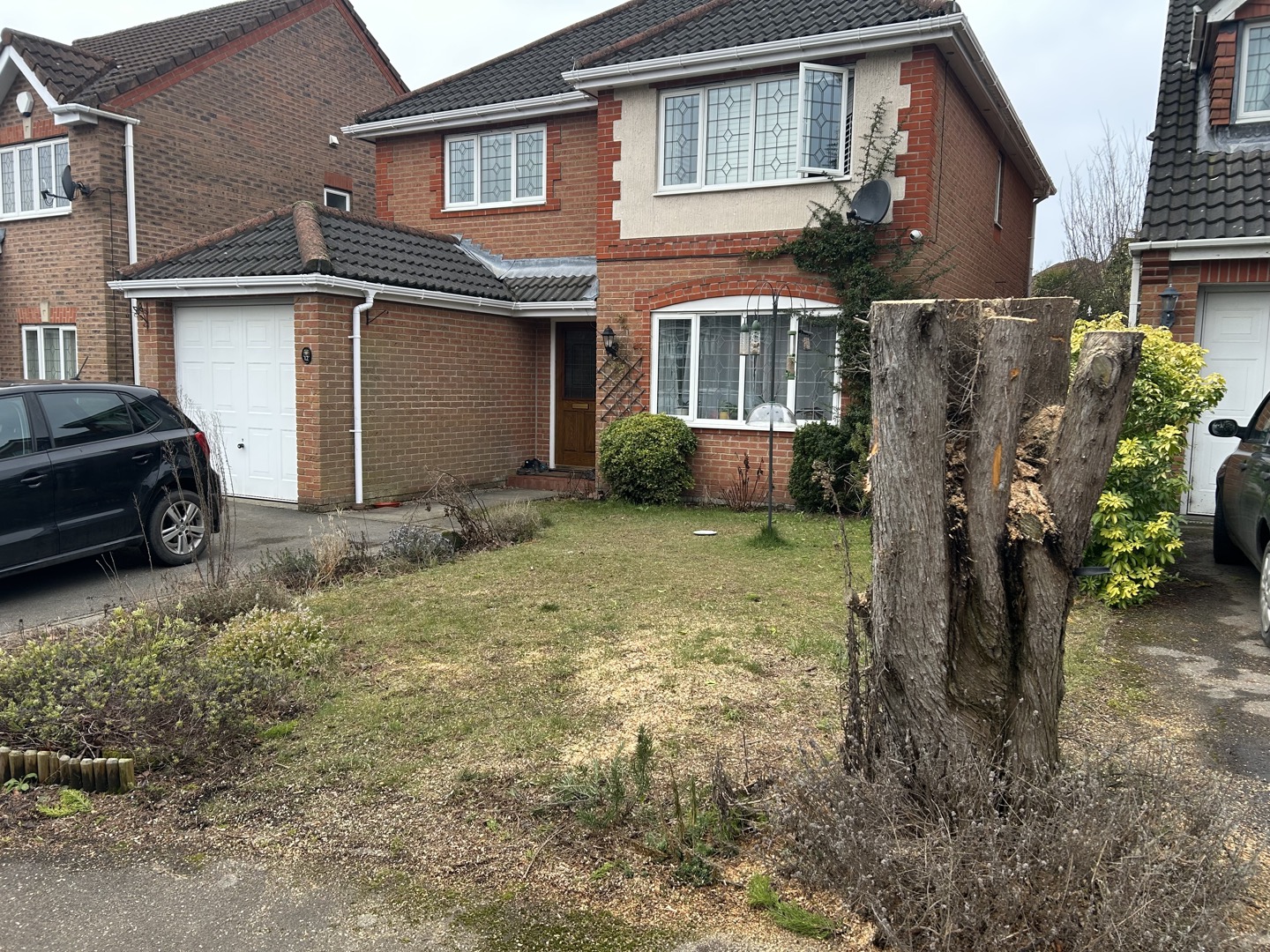
In 2024 C and R came to us wanting to transform what had become a tired, typical suburban garden into a space that would genuinely support wildlife. They already feed birds, hedgehogs and even the local foxes, so they were keen to make the garden a richer, more connected habitat that complemented nearby urban nature reserves. The brief was simple but ambitious: keep it attractive and practical for people, but make it as valuable as possible for wildlife.
Design Approach
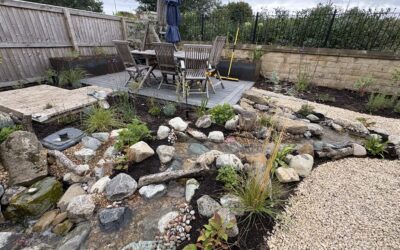
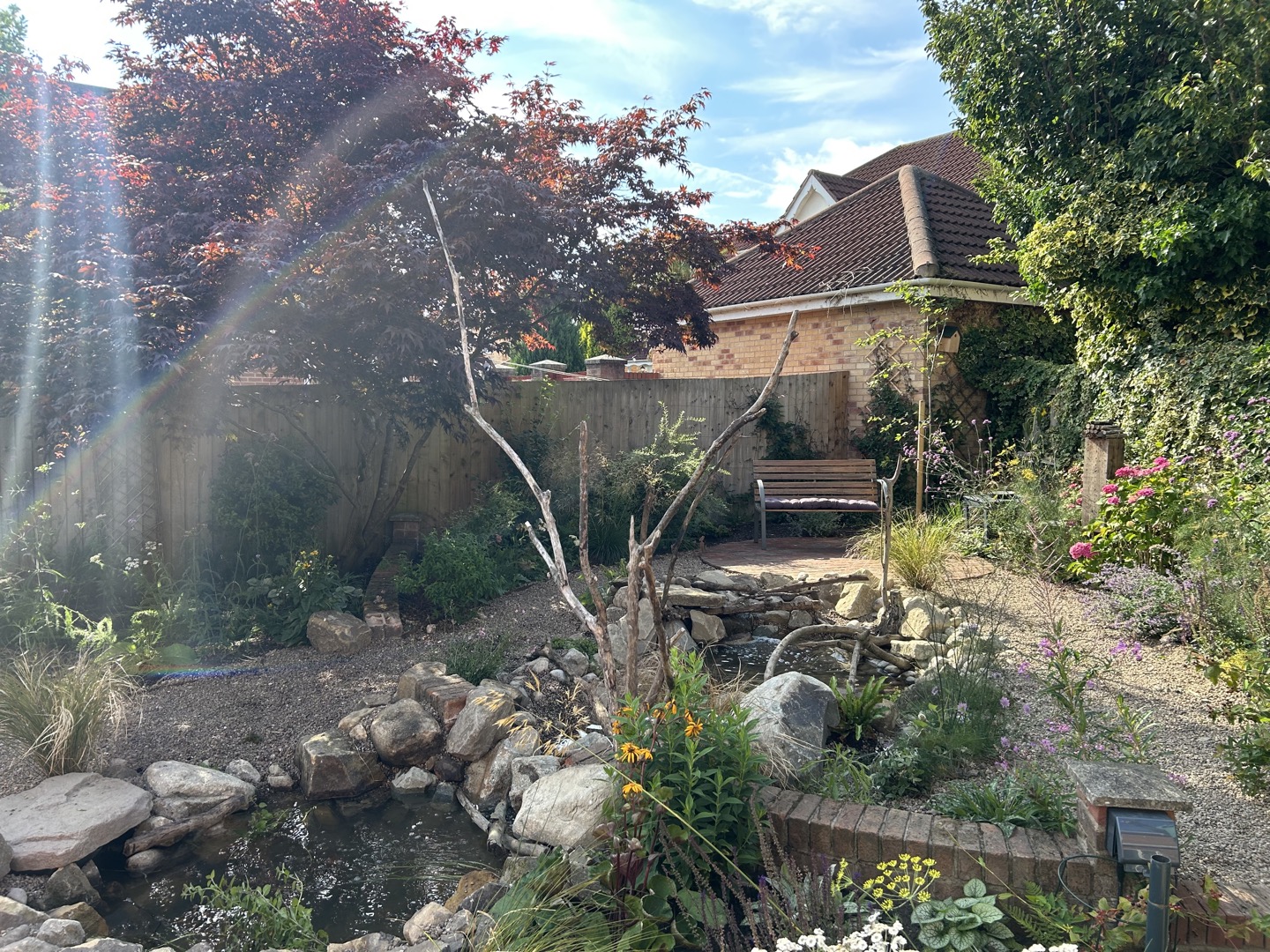
We designed the garden to work as a small ecosystem, using native and near-native planting throughout and linking structural features to support biodiversity. In the back garden, the central feature became an Aquascapes Ecosystem Pond designed to bring movement, sound and life into the space.
The pond was constructed with glacial boulders and Scottish cobbles. We also incorporated some found Yorkshire gritstone to tie it into the local landscape. Planting in and around the pond used native species and cultivars to provide oxygenation, cover and forage for insects, birds and amphibians.
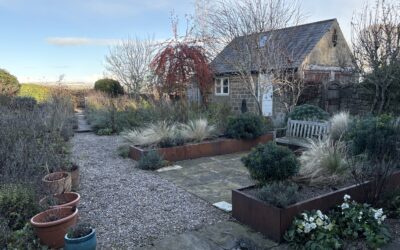
The rear of the garden previously had an old grapevine in the corner where the boundary met the neighbour’s fence. We replaced this area with a clay paver seating circle supplied by London Stone, edged neatly with Core corten steel edging. The red-toned pavers were chosen to complement the brickwork of the house and blend the new elements with the existing setting.
Gravel pathways were introduced to link the main spaces, and we enlarged the seating area immediately outside the house to make it more usable. During the build, the clients asked us to replace the original brick retaining walls with oak sleepers, which gave the space a warmer, more natural feel and tied in with the broader ecological theme.
The Build
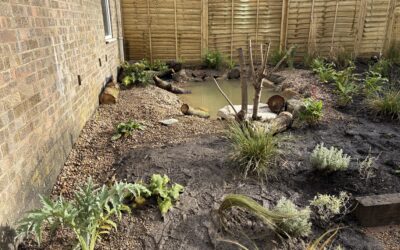
We tackled the back garden first, starting with excavation for the pond and hard landscaping before moving on to planting. The ground conditions were challenging which is reasonably typical of a 1990s estate garden with compacted hardcore and clay beneath a thin layer of topsoil. On our initial visit it was clear that the drainage in the garden was particularly poor, and the area had become boggy over time.
There were also several mature trees around the plot, including a large bay tree and an old cherry that had sent out suckers along the fence line. Working around the established trees while improving the soil took some planning. We retained the existing character of the garden while creating better growing conditions for the new planting.
Once we had filled the pond and the system was running, we found the flow wasn’t quite right and it took a bit of adjustment to get the balance between circulation and clarity. However once we’d managed to get the system settled, it ran absolutely beautifully, producing the clear, oxygen-rich water that these ecosystem ponds are known for.
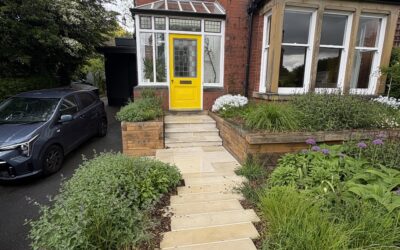
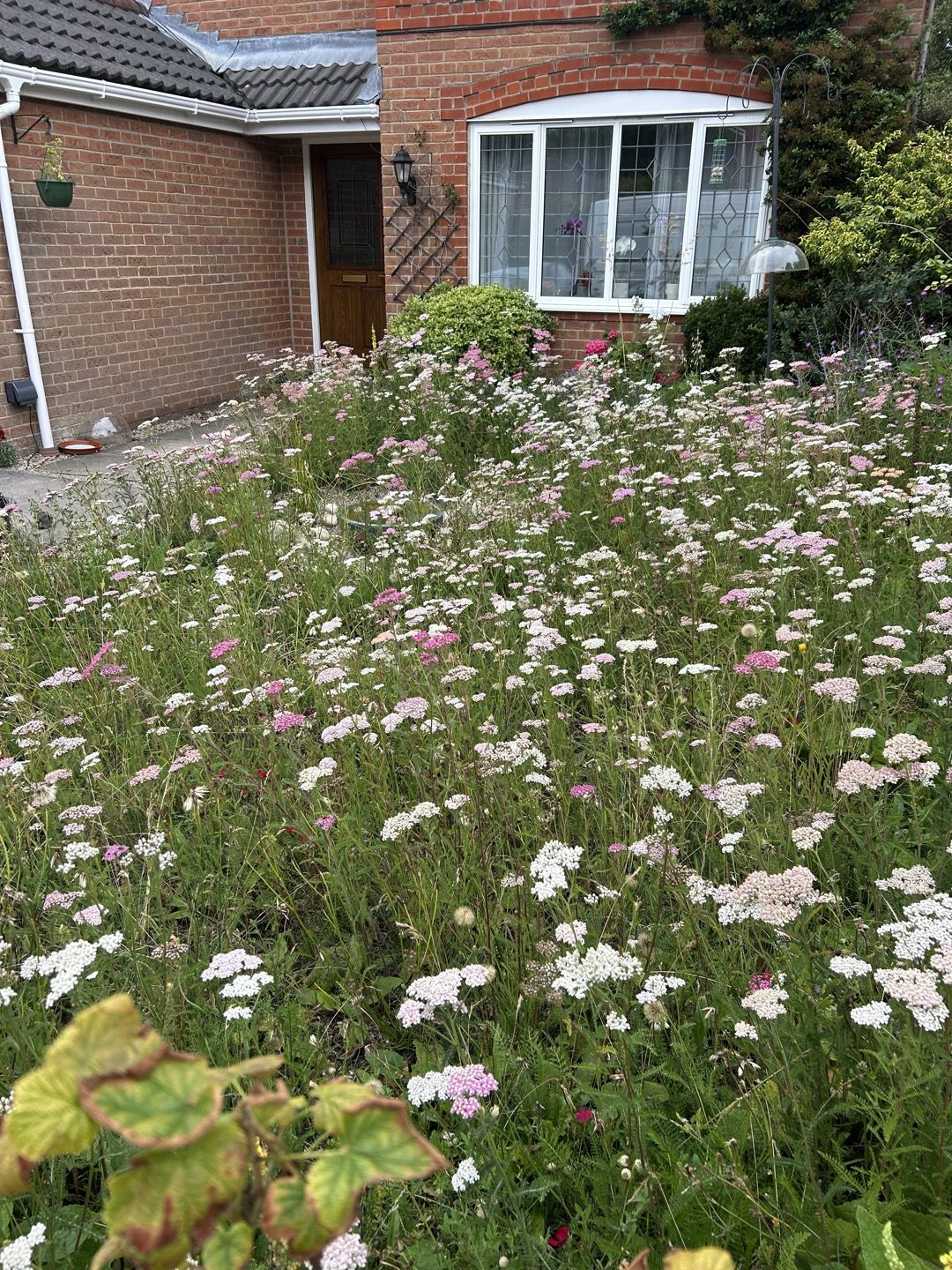
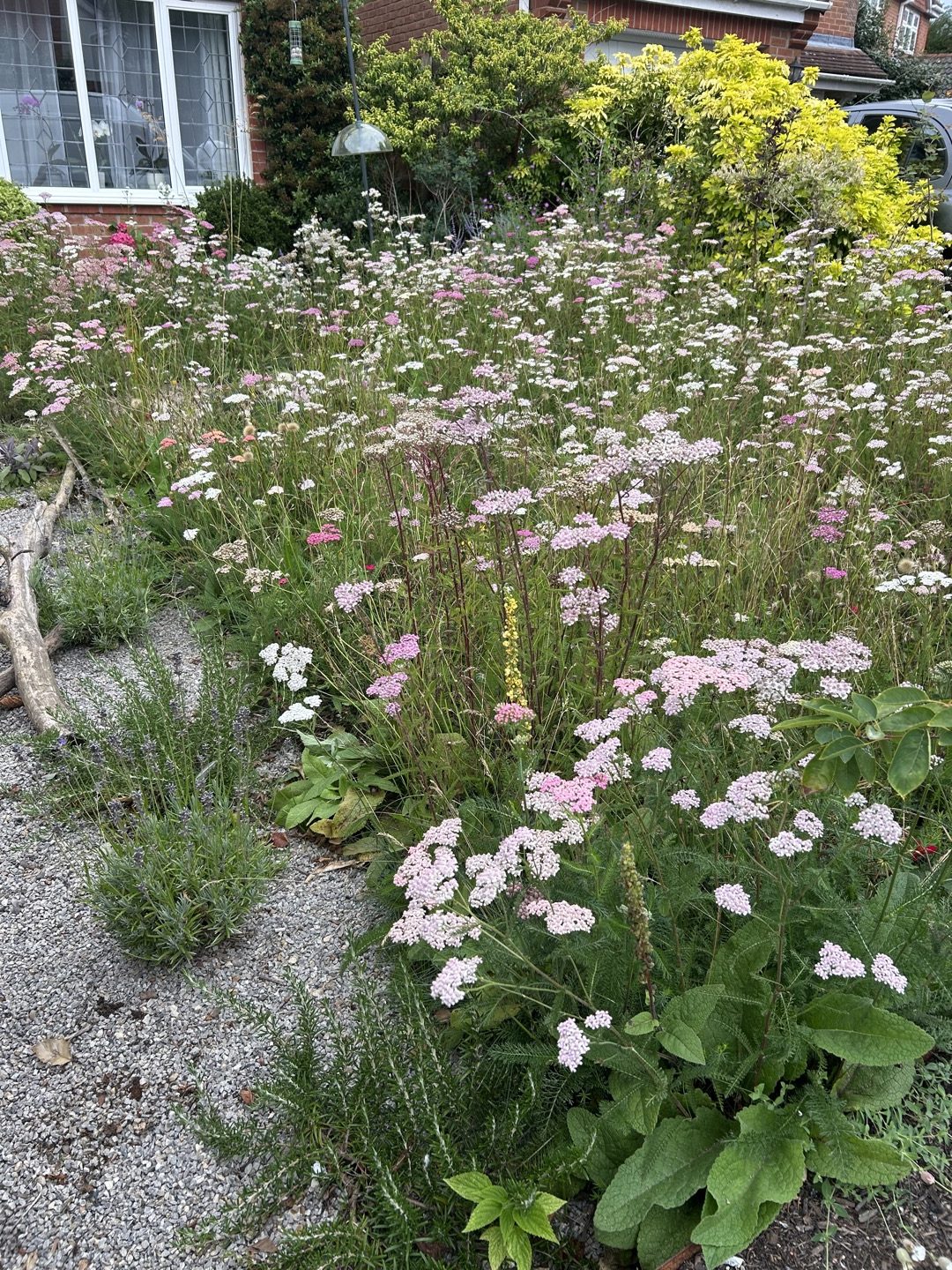
With the back garden complete, we moved on to the front. Here, the focus was on creating a pollinator-rich, low-growing meadow using Pictorial Meadows Pollinator Verge turf. We planted a mixed native hedgerow around the meadow. Fruiting species were included to provide food for birds through the year.
The front garden also includes a small Aquascapes spillway bowl set over a cobble tray to create a gentle water source for birds, hedgehogs and other visiting wildlife.
Challenges and Solutions
Aside from the pond adjustments and poor soil, one of the main challenges was the existing planting.
Like many suburban gardens of its era, much of the existing planting consisted of conventional ornamental shrubs, including berberis, euonymus and spirea. We replaced and supplemented these with a richer mix of native and nectar-rich species, creating more varied layers of planting and a wider range of resources for wildlife through the year.
Result
The finished garden now feels alive. The pond attracts birds, insects and amphibians and the front meadow is alive with pollinators from early spring through to late autumn. The clients have since shared photos and videos of the wildlife visiting, which is exactly the outcome we hoped for.
Materials and Supply
- Clay pavers: Dorset Antique (London Stone)
- Edging and gravel grid: Core Landscape Products
- Compost, gravel and aggregates: Palmer Plants
- Meadow turf: Pictorial Meadows
- Planting: Naturescape LLP, Wetland Plants and Johnson’s of Whixley
- Aquascape pond products: Supplied via LandscapePlus