Dead wood might sound lifeless, but it is one of the most important habitats in any landscape. Around 40% of woodland species rely on it at some stage in their life cycle. All manner of insects, spiders, beetles and fungi to the birds, amphibians and mammals that feed on the insects within. Creating a dead wood feature in your garden is simple. It is inexpensive. It provides years of value for wildlife.
Why it matters
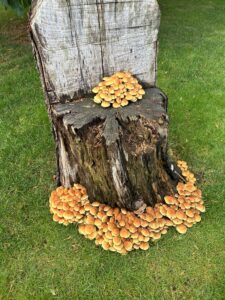
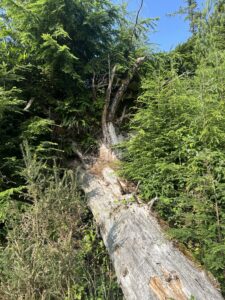
In forests and woodlands where the management is either light touch or non-existent, fallen trees, branches, trunks, roots and root-plates break down slowly. They feed the soil and create shelter for insects amphibians and small mammals. In most gardens and managed spaces we tidy this away which leaves very little for these species to live in. By reintroducing dead wood you bring that lost process back into your garden ecosystem.
A shared understanding
During a recent conversation with Dominic Knower, founder of Niche Environmental Services, we talked about how structure and texture in a garden can transform its ecological value. Dom has spent over fifteen years bridging ecology and landscape management. He helps clients weave biodiversity into everyday spaces.
What struck me most was his point that biodiversity thrives on complexity. The more variation we create the more life we invite in. “You can boost habitat on a patio in an afternoon” he said “just by adding height shadow and edges.” That idea of small interventions with big impact sits right at the heart of rewilding.
Building the feature
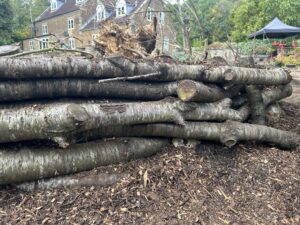
There is no single right way to do it. What matters most is structural complexity. Layers textures and microclimates that create niches for life. Think of it as building a small cross section of a fallen tree. A pile that is all one texture will support far less than one made up of mixed species shapes and levels of decay.
As I often say to clients “It is no good putting in just some Leylandii logs. You are far better off with a mix. Oak, Cherry, Ash, Hornbeam and not just logs, you need twigs and sticks, tree stumps and whole limbs. Some buried some above ground some in sun some in shade.”
Here is a simple way to layer it:
1) Start below the surface. Bury the lower ends of some logs or branches into the soil. This keeps part of the structure damp and creates the conditions a lot of our native beetles, fungi and other detritivores need.
2) Add a middle layer. Lay larger pieces horizontally then fill the gaps with smaller branches bark and twigs. This adds structure and shelter for species that prefer drier conditions.
3) Finish above ground. Lean a few upright sections to catch the light. Solitary bees wasps and birds use these sun warmed surfaces to rest, nest and hunt.
A pile built this way has both depth and variety. Over time it becomes what Dom described as a micro landscape. “Above ground, below ground, semi-buried, lying in water, catching sun and holding shade. As many conditions as you can possibly have. Remember structural complexity creates biodiversity”
You do not need to make it tidy or decorative. In fact, the slight unevenness is what gives it life. If you think of a flat uniform pile, it will attract some insects, however a layered one creates an entire complex food web which means Fungi, beetles, birds and mammals all feeding into one another.
As Dom reminded me “A third of all species on the planet are beetles and around forty per cent of woodland species depend on dead wood at some point in their life cycle.” So what we’re saying is this isn’t a trivial effort, every log, branch and stick you add is a new space for life to begin.
Over time the pile will settle into the ground and soften at the edges. It will blend into its surroundings and quietly work as one of the most important features in your garden.
About Dominic Knower — Founder Niche Environmental Services
Dominic Knower is an ecologist designer and founder of Niche Environmental Services.
His career began in the horticultural trade before moving through grounds maintenance bid writing and sustainability management at one of Europe’s largest landscape companies.
With a degree in Ecology and Conservation and a passion for invertebrates particularly solitary bees and wasps Dom brings a rare blend of ecological knowledge and practical experience to the landscaping world. He has been involved with the creation of award winning gardens, written sustainability strategies and developed innovative habitat products inspired by pioneers such as George Pilkington, Green and Blue and John Little of the Grass Roof Company.
Through Niche Dom works with local authorities contractors and designers to integrate biodiversity into urban and commercial spaces. He challenges traditional landscaping practice and promotes creative science led design. His work continues to influence a growing movement towards landscapes that serve both people and wildlife.
About Ed Bailey — Director Rewild Landscapes Ltd
Ed Bailey is the founder and director of Rewild Landscapes Ltd. A Leeds based design and build company, creating gardens that restore nature and reconnect people with the land. Combining practical craftsmanship with ecological understanding Ed and his team specialise in wildlife friendly gardens, Aquascape ecosystem ponds, meadows and native planting schemes.
Rewild Landscapes’ ethos is simple. To design build and maintain gardens that give back more than they take. Each project blends form and function guided by native planting and sustainable construction. Ed continues to collaborate with forward thinking partners such as Niche Environmental Services to push the boundaries of what modern landscaping can achieve for biodiversity
If you’d like to explore how deadwood features could fit naturally into your garden design, or you’d like advice on creating wildlife habitat at home, feel free to get in touch. –Link to contact page on website