Experimental Substrates, Zero Irrigation and Structural Complexity
In my last article I looked at zero irrigation planting and the role of plant selection. This time I want to explore what sits underneath the planting. If irrigation is removed from a scheme then the substrate has to work much harder. Structure, drainage and moisture retention become more important than fertility.
Once irrigation is taken out of the picture you can start to think differently about the materials below the surface. You do not need a uniform layer of imported topsoil. You need something that slows rain, holds pockets of moisture and gives roots space to move.
Some of the materials I have been looking at include:
Experimental Substrates for Sustainable Landscape Design
- deadwood used as a slow-degrading moisture reservoir
- stacked timber sections or trunk pieces
- clean demolition waste providing drainage and voids
- crushed brick or blockwork that warms and dries quickly
- woody arisings and coarse green waste that break down over time
- stone offcuts used as retaining structure or filler
- sand which dries quickly at the surface but can hold deeper moisture when layered well
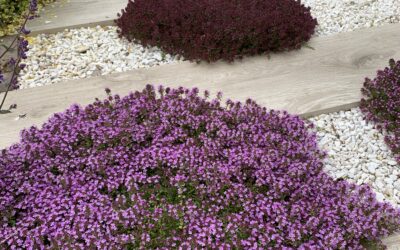
- gravel which creates voids and airflow and slows the movement of water
- ballast which adds weight, drainage and a range of particle sizes
These materials behave in different ways. Deadwood releases moisture slowly. Brick drains well and stores heat. Rubble forms air pockets. Sand encourages deeper roots. Gravel and ballast give stability and rapid infiltration which suits many drought-tolerant species.
Once irrigation is removed the whole system behaves more like a rainfall filter than a planted bed.
The aim is for the substrate to:
- hold moisture deeper in the profile
- allow airflow between coarse layers
- slow rainfall long enough for roots to use it
- avoid slumping after winter
- create gradients and pockets rather than a uniform block
A lot of these repurposed materials perform well here and create structure from day one.
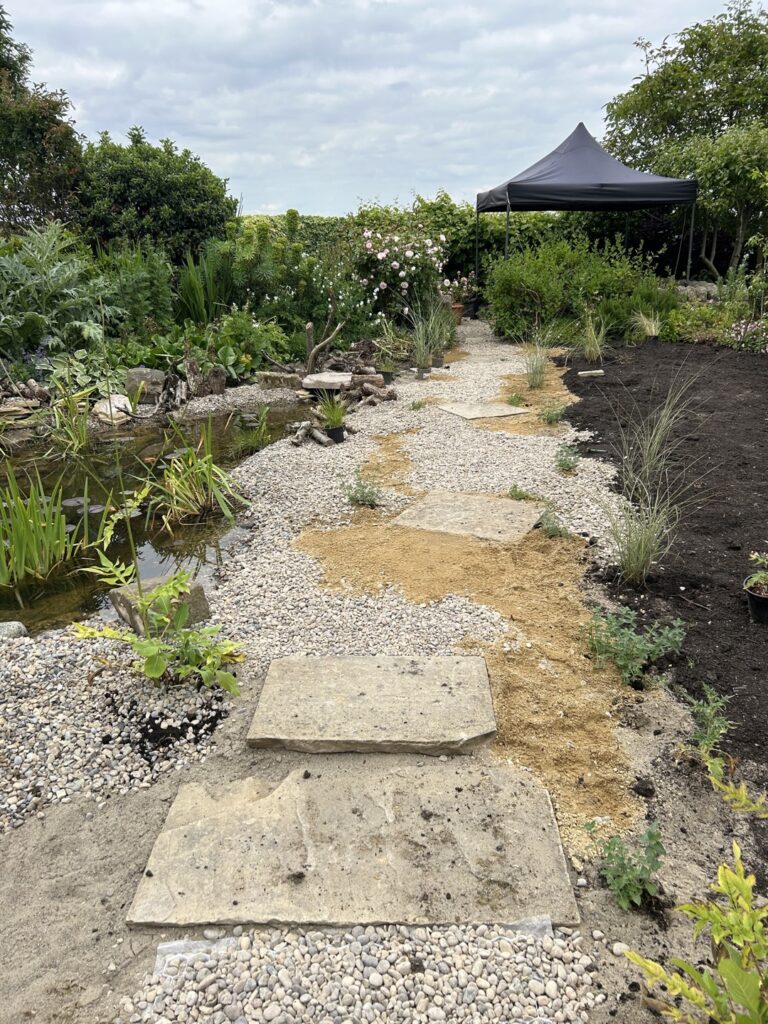
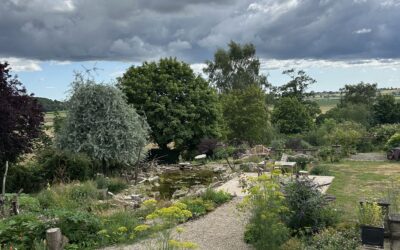
Stone, soil, sand and gravel create varied growing conditions, offering opportunities for different plants to establish within a naturalistic landscape.
Structural Complexity, Microhabitats and Biodiversity
What interests me most is the structural complexity that comes from this kind of layering. A mix of rubble, brick, timber, deadwood, sand, gravel and organic material creates far more internal variation than a simple run of topsoil. You get:
- warm dry pockets
- cool damp zones
- voids and air channels
- rotting wood
- mineral surfaces
- shaded crevices
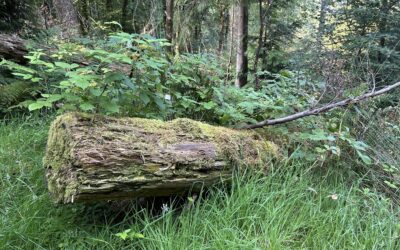
These act as microhabitats. A review of deadwood biodiversity found that deadwood alone supports a wide range of fungi and invertebrates because of the textures and moisture patterns within it (Vogel et al., 2020). The same principles often apply when woody material is used in urban planters.
Most of the existing research focuses on deadwood because it is well studied. There is much less work on rubble, crushed brick or demolition waste as substrates. That gap is interesting because these materials behave very differently, especially when irrigation is removed from the design.
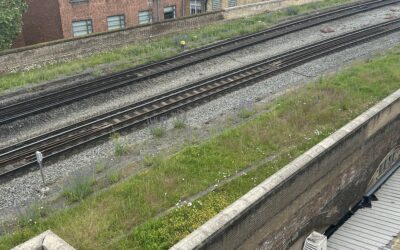
There are also useful insights from studies on unmanaged urban “voids”. A systematic review found that plant diversity in leftover spaces is shaped mainly by substrate, soil age and the complexity that builds up over time (Cui et al., 2025). Older and more irregular sites consistently supported higher biodiversity. These experimental substrates can achieve the same variation from day one rather than waiting years for it to develop.
Lessons from Cornish Hedges
There is a useful comparison here with Cornish hedges. These are built from layers of stone, soil, turf and organic material and over time they develop a surprising amount of internal structure. Warm pockets near the stone faces. Cool, damp areas deeper in the metre-thick core. Voids and crevices created as the materials settle. They also shift slowly as they age which creates even more niches for plants, mosses, invertebrates and small animals. What we are proposing with experimental substrates in planters is not the same thing but the principle is similar. A structure made from mixed materials that creates varied conditions and supports a wider range of species than a uniform block of imported topsoil.
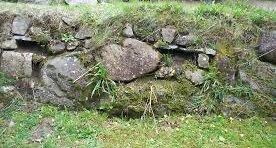
An ageing stone retaining wall demonstrates how gaps between stones, accumulated soil and natural weathering create opportunities for plants to establish.
Image credit: Photographer unknown. If you recognise this photograph or hold the rights to it, please contact Rewild Landscapes regarding attribution or removal.
Substrate pH, Plant Selection and Intentional Variation
Unconventional substrates also influence pH. Crushed brick, concrete rubble, gravel and ballast often push pH towards the alkaline end, especially if lime is present. Sand can be neutral or slightly acidic. Deadwood and other woody material tend to acidify the areas around them. Layering these materials creates pockets with different pH values in the same planter. That variation supports different plant and soil communities but needs to be reflected in the planting palette.
There is a point where too much variation can work against you. If the substrate becomes so mixed or fragmented that no consistent conditions develop then very few species will tolerate it. Extreme swings in pH, moisture and texture can make the space hostile rather than supportive. The goal is to create structure and pockets of difference rather than a chaotic mix. This is where plant selection matters again. The palette has to match the conditions you expect to develop, not a theoretical ideal.
The Future of Zero-Irrigation Urban Landscapes
If the planting palette is matched to the site then zero irrigation allows us to design planters that are:
- cheaper to build
- more circular in their use of materials
- richer in habitat value
- more resilient to heat, drought and exposure
- visually more varied than standard beds
There is a lot of potential here, especially for commercial landscapes, rooftops and streetscapes where waste materials are already available. This crossover between zero irrigation planting, circular material use and habitat creation is an area I want to explore further.
If you have worked with unconventional substrates or have tested zero-irrigation planting in difficult urban conditions I would be interested to hear what has and hasn’t worked for you. I am looking to explore this further over the coming months so any examples, case studies or reading recommendations are welcome.
#StructuralComplexity #NatureBasedSolutions #BiodiversityByDesign #GreenInfrastructure #DeadwoodEcology #UrbanEcology #SustainableLandscapes