Are We Creating Habitats, or Just Planting Things?
Why deadwood, varied substrates, vegetation structure and thoughtful landscape management deserve as much attention as planting.
When we think about habitat creation, planting is often one of the first things that comes to mind.
Woodland establishment, native hedgerows, wildflower meadows and new planting schemes are familiar elements of biodiversity enhancement projects. They’re also important tools in creating and restoring habitats.
But planting is only one part of the process.
The physical structure of a landscape, including its soils, substrates, topography, deadwood, vegetation and moisture conditions, influences the ecological opportunities it can provide.
In many existing commercial landscapes, there may be opportunities to introduce greater structural diversity without extensive additional planting.
Perhaps the question isn’t simply what else we can plant, but what additional habitat opportunities we can create.
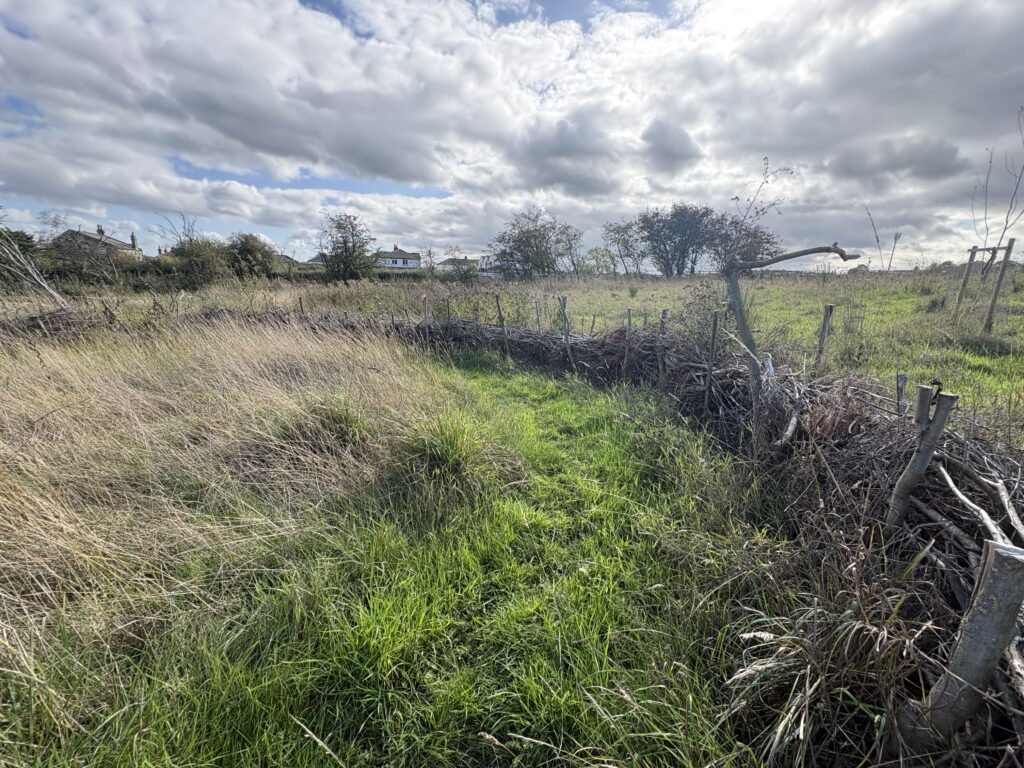
Dead hedging constructed using woody material generated on site, alongside grassland deliberately managed to create structural diversity. A Rewild Landscapes project.
Habitat Creation Is More Than Vegetation
Consider an established commercial landscape containing amenity grassland, mature trees, ornamental planting and boundary vegetation.
The site may already provide ecological value, but there may also be opportunities to develop a wider range of physical conditions.
Rather than immediately introducing additional planting, we could consider how the existing landscape might be adapted.
Could timber generated through routine tree management be retained as deadwood habitat? Could areas of grassland develop greater variation in vegetation height? Are there suitable locations for exposed mineral substrates, or opportunities to introduce small differences in ground levels and moisture availability?
These aren’t necessarily alternatives to planting. They’re complementary approaches that can contribute to habitat diversification.
The objective isn’t to introduce as many features as possible, but to create appropriate structural variation that responds to the site’s existing habitats and ecological objectives.
Deadwood: A Resource We Often Remove
Deadwood is an important component of many woodland ecosystems, supporting fungi, invertebrates and other organisms throughout the decomposition process.
Yet timber generated through routine tree management is frequently removed from managed landscapes.
Where appropriate, retaining some of this material can create habitat opportunities while reducing the need to transport and dispose of it.
Different arrangements of deadwood provide different physical conditions.
Large logs in contact with the ground may retain moisture and gradually develop communities associated with decomposing timber. More exposed material can provide warmer, drier conditions, while standing deadwood offers different structural characteristics from fallen wood.
Branches and smaller woody material can also be incorporated into dead hedges, creating dense structural cover that can complement existing hedgerows and woodland margins.
Importantly, deadwood habitats continue to develop over time.
As timber decomposes, its physical structure changes, creating opportunities for different organisms at different stages.
Of course, deadwood retention needs to be considered alongside site safety, access requirements and existing ecological conditions. Not every location is suitable for retaining standing or fallen timber.
But where appropriate, material that might otherwise be treated as waste can become a useful part of a wider habitat enhancement scheme.
Not Everything Needs to Be Planted
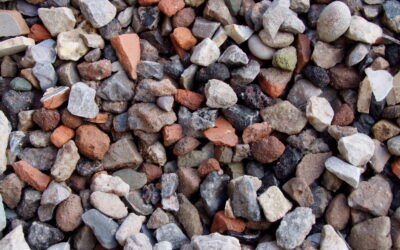
Areas of exposed soil, sand, gravel and stone are sometimes regarded as unfinished surfaces within designed landscapes.
However, sparsely vegetated ground can provide valuable conditions for certain plants and invertebrates.
For example, suitably exposed sandy substrates can offer nesting opportunities for some solitary bees and wasps, while differences in drainage and moisture retention can influence which plant communities establish.
The relationship between these substrates and surrounding vegetation is particularly important.
An area of exposed mineral soil adjacent to established grassland may offer different ecological opportunities from the same material placed in an isolated or heavily shaded location.
There may also be opportunities to reuse suitable materials already present on site.
Stone, mineral soils and other site-won materials can sometimes be incorporated into habitat features rather than removed during construction.
However, material suitability matters. Contamination, composition, drainage characteristics and the ecological context of the site all need to be considered.
The aim isn’t simply to introduce more materials, but to create appropriate physical conditions that complement the existing landscape.
Creating Variation Within Existing Vegetation
Structural diversity doesn’t always require construction.
Sometimes it can be developed through changes to how existing vegetation is managed.
Grassland provides a straightforward example.
A uniformly short sward offers different conditions from an area containing taller grasses, flowering plants, tussocks and accumulated organic material.
Introducing variation in mowing frequency and timing can create different vegetation structures within the same landscape.
This doesn’t mean abandoning grassland management.
Short grass may still be required for access, recreation or visibility, while longer vegetation may need periodic cutting to maintain its intended characteristics.
The opportunity lies in developing a more varied approach that accommodates both ecological and operational requirements.
Similar principles apply to hedgerows and woodland margins.
Where space permits, allowing gradual transitions between established trees, shrubs and open grassland can create variation in shelter, exposure and vegetation structure.
In some cases, a change in management may provide more appropriate habitat enhancement than introducing additional planting.
Small Changes in Levels, Different Ecological Opportunities
Topography and moisture availability can also contribute to structural habitat diversity.
Even relatively small changes in ground levels can influence drainage, exposure and soil moisture.
A shallow depression may retain water temporarily following rainfall, while an adjacent raised area remains comparatively dry.
These differences can create opportunities for different vegetation communities and associated wildlife.
Where appropriate, habitat enhancement works might incorporate shallow scrapes, small mounds or variations in substrate depth.
Existing drainage features may also provide opportunities to introduce greater habitat diversity, particularly where water-management requirements can be integrated with appropriate planting and landscape design.
However, creating a depression doesn’t automatically establish a wetland, just as introducing gravel doesn’t automatically create a valuable dry habitat.
The physical conditions must be suitable, and the ecological communities associated with them will develop over time.
Working With What Is Already There
One of the most interesting opportunities in commercial habitat enhancement is the potential to make better use of existing landscape materials and features.
Timber generated through appropriate tree management, suitable stone and mineral substrates from construction, and established vegetation can all provide opportunities for habitat improvement.
This approach can also reduce the need for material imports and waste removal.
More importantly, it encourages us to consider the ecological potential of materials and features that might otherwise be overlooked.
A fallen branch isn’t necessarily waste.
An exposed area of mineral soil isn’t automatically a surface requiring planting.
An area of seasonally wet ground isn’t always something that needs to be drained.
Each may offer opportunities, depending on its location, existing ecological value and intended use.
Recognising these opportunities requires an understanding of both ecological objectives and the practical realities of landscape construction and management.
Autumn and Winter: Opportunities for Habitat Enhancement
Autumn and winter can provide useful opportunities to undertake certain structural habitat improvements.
Appropriate tree and vegetation management may generate woody material that can be retained and incorporated into deadwood features.
Selected grassland and scrub management works can help develop or maintain variation in vegetation structure.
Where site conditions permit, substrate preparation, small-scale earthworks and habitat construction may also be undertaken.
However, seasonal suitability depends on the existing habitats, ground conditions and ecological constraints.
Waterlogged soils may be vulnerable to compaction, while vegetation and existing habitat features can support wildlife throughout the year.
Any works should therefore be planned around appropriate ecological considerations, including protected species and sensitive habitats.
The objective is to use seasonal opportunities where they are appropriate, rather than assuming that autumn and winter are universally suitable for habitat works.
Habitat Creation Doesn’t End at Installation
Structural habitat features aren’t static.
Deadwood decomposes. Exposed substrates become colonised by vegetation. Grassland structure changes through growth and management. Seasonal wet areas respond to rainfall and changing conditions.
These processes are part of habitat development.
However, they also mean that some features require ongoing management to maintain the conditions they were intended to provide.
An exposed sandy area may gradually become vegetated. A grassland margin may become increasingly uniform without appropriate cutting. A dead hedge may eventually require additional material as the original structure decomposes.
This highlights the importance of considering establishment and long-term management alongside initial construction.
The success of habitat enhancement shouldn’t be judged solely by what has been installed, but also by how those features develop and contribute to the wider landscape.
Beyond Planting
Planting remains an essential component of habitat creation and ecological landscape design.
But improving biodiversity isn’t necessarily about introducing more vegetation.
Retaining deadwood, developing varied vegetation structures, incorporating appropriate substrates and recognising existing differences in topography and moisture can all contribute to more structurally diverse landscapes.
These interventions should respond to the ecological characteristics and objectives of the site, rather than being treated as universally beneficial additions.
For commercial landscapes in particular, there may be considerable opportunities to integrate structural habitat improvements into existing landscape management and enhancement programmes.
Sometimes the most useful question isn’t what additional planting a site requires.
It’s what ecological opportunities we could create by working more thoughtfully with the materials, structures and conditions already present.